
THƯ NGỎ GỬI BÀ LOUISE ARBOUR
TOÀN QUYỀN VÀ TỔNG TƯ LỆNH CANADA
(Đây là bản dịch không chính thức từ bản gốc tiếng Pháp, chỉ để tham khảo.)
Ottawa, ngày 21 tháng 9 năm 2026
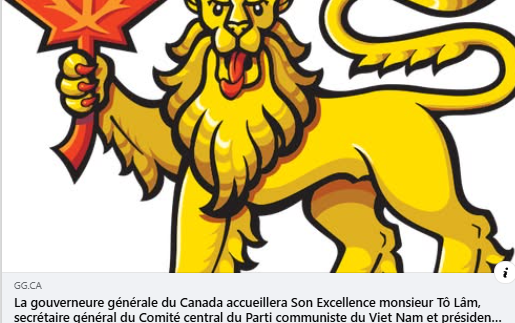
Kính thưa Bà Toàn quyền,
Tôi tên là Vũ Đức Khanh. Tôi sinh tại Việt Nam. Năm mười sáu tuổi, tôi là một trong những “thuyền nhân” được một con tàu Bỉ cứu vớt trên đại dương. Tôi lớn lên tại Bỉ trước khi đến Canada để học luật. Hôm nay, tôi là một luật sư.
Hành trình ấy không chỉ là một bản tiểu sử. Đó là lý do tôi viết thư này cho Bà.
Trong vài ngày tới, ngày 24 tháng 9, Ottawa sẽ đón Tổng Bí thư Đảng Cộng sản và Chủ tịch nước Việt Nam, Tô Lâm, trong khuôn khổ một chuyến thăm cấp Nhà nước. Người ta sẽ nói về thương mại, đầu tư, khoáng sản thiết yếu, an ninh và địa chính trị Ấn Độ Dương – Thái Bình Dương.
Nhưng tôi muốn đặt với Bà một câu hỏi căn bản hơn: khi Canada đón tiếp một nhà lãnh đạo nước ngoài, chúng ta muốn cử chỉ ấy nói lên điều gì về chính mình?
Bà đã dành phần lớn cuộc đời nghề nghiệp của mình cho việc bảo vệ pháp luật, tại Canada cũng như trên trường quốc tế. Bà từng truy tố các tội ác chiến tranh tại Nam Tư cũ và Rwanda, từng là Thẩm phán Tòa án Tối cao Canada và từng lãnh đạo Cao ủy Liên Hiệp Quốc về Nhân quyền.
Khi nhậm chức Toàn quyền, Bà đã nhắc rằng, khi đại diện cho Canada ở nước ngoài hoặc đón tiếp các vị khách cấp cao nước ngoài tại đây, Bà mong muốn làm cho sự đa dạng của những tiếng nói Canada được lắng nghe.
Vậy, trong những tiếng nói ấy, liệu có cả tiếng nói của những người Canada từng phải chạy trốn khỏi các chế độ độc tài?
Tôi không yêu cầu Bà lên lớp Tổng Bí thư, Chủ tịch nước Tô Lâm. Tôi chỉ mong Bà đừng để "raison d’État" (lý do quốc gia) bóp nghẹt "raison d’être" (mục đích tồn tại) của Canada.
Canada có thể theo đuổi các lợi ích kinh tế và chiến lược của mình đồng thời nói rõ về pháp quyền, các quyền tự do cơ bản và phẩm giá con người. Những nguyên tắc ấy không phải là trở ngại đối với một mối quan hệ quốc tế trưởng thành. Chính chúng là khuôn khổ để mối quan hệ ấy có thể bền vững và đáng tin cậy.
Đối với những người như chúng tôi từng trải qua sự cai trị tùy tiện, những nguyên tắc ấy không phải là những điều trừu tượng.
Tôi trở thành người Canada bằng sự lựa chọn, bằng quá trình học tập và bằng sự gắn bó của mình với đất nước này. Nhưng tôi không quên mình đã đến từ đâu. Tôi hiểu thế nào là sống trong một đất nước nơi quyền tự do phê phán quyền lực không được bảo đảm, nơi báo chí không độc lập và nơi việc thực thi một số quyền có thể phải trả giá bằng những tổn thất cá nhân rất lớn.
Chính các định chế của Canada — pháp quyền, sự phân quyền, tự do ngôn luận và nền tư pháp độc lập — đã giúp một người tỵ nạn trẻ tuổi như tôi trở thành luật sư và công dân của đất nước này.
Đó là lý do tôi kính trọng đặt với Bà câu hỏi này: trong những cuộc trao đổi với Tổng Bí thư, Chủ tịch nước Tô Lâm, liệu các giá trị Canada có tiếp tục ở vị trí trung tâm của thông điệp, hay sẽ bị đẩy xuống thành những cân nhắc mang tính nghi thức?
Tôi không yêu cầu Bà một bài diễn văn cụ thể. Tôi thậm chí không yêu cầu Bà phải công khai trả lời.
Tôi chỉ mong Bà nhớ rằng, đối với nhiều người Canada có nguồn gốc từ lưu vong và di dân, quan hệ của Canada với quê hương của họ không bao giờ chỉ là câu chuyện thương mại hay địa chính trị.
Nó còn là câu hỏi về việc Canada đại diện cho điều gì.
Chuyến thăm cấp Nhà nước ngày 24 tháng 9 sẽ được chụp ảnh, bình luận và phân tích. Người ta sẽ nói về các quan hệ đối tác chiến lược, an ninh Ấn Độ Dương – Thái Bình Dương và quá trình chuyển đổi năng lượng. Nhưng Canada cũng sẽ được quan sát qua những gì mình nói — hoặc không nói — về phẩm giá con người, tự do ngôn luận và quyền được phản biện quyền lực một cách ôn hòa.
Vì vậy, tôi viết thư này không phải để chỉ dẫn Bà phải nói gì, mà để nhắc Bà về một trách nhiệm đặc biệt: khi Canada đón tiếp một nhà lãnh đạo nước ngoài, Canada không chỉ đại diện cho những lợi ích của mình. Canada còn đại diện cho những giá trị và định chế đã khiến đất nước này trở thành nơi trú ẩn cho biết bao con người đến từ những nơi khác trên thế giới.
Chúng tôi — những người Canada có nguồn gốc từ di dân, lưu vong và chiến tranh — đã chọn đất nước này bởi chúng tôi nhìn thấy ở đây một lời hứa: một trật tự được xây dựng trên nền tảng pháp quyền thay vì sức mạnh quyền lực.
Thưa Bà Toàn quyền, đó là lời hứa mà chúng tôi hy vọng sẽ thấy Bà mang theo khi đón tiếp Tổng Bí thư, Chủ tịch nước Tô Lâm.
Xin trân trọng cảm ơn Bà đã dành sự quan tâm cho những lời này và xin Bà nhận nơi đây, thưa Bà Toàn quyền, sự kính trọng sâu sắc nhất của tôi.
Vũ Đức Khanh
Luật sư
Công dân Canada gốc Việt
*****
Lettre ouverte à Son Excellence la très honorable Louise Arbour
Gouverneure générale et commandante en chef du Canada
Ottawa, le 21 septembre 2026
Madame la Gouverneure générale,
Je m’appelle Khanh Vu Duc. Je suis né au Vietnam. À seize ans, j’étais l’un de ces « boat people » qu’un navire belge a recueillis en mer. J’ai grandi en Belgique avant de venir au Canada pour y étudier le droit. Je suis aujourd’hui avocat.
Cette trajectoire n’est pas qu’une biographie. C’est la raison pour laquelle je vous écris.
Dans quelques jours, le 24 septembre, Ottawa accueillera le Secrétaire général du Parti communiste et Président du Vietnam, Tô Lâm, dans le cadre d’une visite d’État. On parlera de commerce, d’investissement, de minéraux critiques, de sécurité et de géopolitique indo-pacifique.
Mais je voudrais vous poser une question plus fondamentale : lorsque le Canada accueille un dirigeant étranger, que voulons-nous que ce geste dise de nous-mêmes ?
Vous avez consacré une grande partie de votre vie professionnelle à faire respecter le droit, au Canada comme sur la scène internationale. Vous avez poursuivi des crimes de guerre en ex-Yougoslavie et au Rwanda, siégé à la Cour suprême du Canada et dirigé le Haut-Commissariat des Nations Unies aux droits de l’homme.
Lors de votre installation comme gouverneure générale, vous avez rappelé que, lorsque vous représentez le Canada à l’étranger ou accueillez des dignitaires étrangers ici, vous souhaitez faire entendre la diversité des voix canadiennes.
Alors, parmi ces voix, y aura-t-il aussi celle des Canadiens qui ont fui des régimes autoritaires ?
Je ne vous demande pas de faire la leçon au Président Tô Lâm. Je vous demande de ne pas laisser la "raison d’État" étouffer la "raison d’être" du Canada.
Le Canada peut poursuivre ses intérêts économiques et stratégiques tout en parlant clairement de l’État de droit, des libertés fondamentales et de la dignité humaine. Ces principes ne sont pas des obstacles à une relation internationale mature. Ils constituent précisément le cadre dans lequel cette relation peut être durable et crédible.
Pour ceux d’entre nous qui avons connu l’arbitraire, ces principes ne sont pas abstraits.
Je suis devenu Canadien par choix, par formation et par engagement. Je n’oublie pourtant pas d’où je viens. Je sais ce que signifie vivre dans un pays où la liberté de critiquer le pouvoir n’est pas garantie, où la presse n’est pas indépendante et où l’exercice de certains droits peut avoir un coût personnel considérable.
Ce sont les institutions canadiennes — la primauté du droit, la séparation des pouvoirs, la liberté d’expression et l’indépendance de la justice — qui ont permis à un jeune réfugié de devenir avocat et citoyen de ce pays.
C’est pourquoi je vous pose respectueusement cette question : dans vos échanges avec le Président Tô Lâm, les valeurs canadiennes resteront-elles au cœur du message, ou seront-elles reléguées au rang de considérations protocolaires ?
Je ne vous demande pas un discours particulier. Je ne vous demande même pas de répondre publiquement.
Je vous demande simplement de vous souvenir que, pour beaucoup de Canadiens issus de l’exil et de l’immigration, la relation du Canada avec leur pays d’origine n’est jamais seulement une question de commerce ou de géopolitique.
Elle est aussi une question de ce que le Canada représente.
La visite d’État du 24 septembre sera photographiée, commentée et analysée. On y parlera de partenariats stratégiques, de sécurité indo-pacifique et de transition énergétique. Mais le Canada sera également observé pour ce qu’il dira — ou ne dira pas — de la dignité humaine, de la liberté d’expression et du droit de contester pacifiquement le pouvoir.
Je vous écris donc non pas pour vous dicter un discours, mais pour vous rappeler une responsabilité particulière : lorsque le Canada accueille un dirigeant étranger, il ne représente pas seulement ses intérêts. Il représente aussi les valeurs et les institutions qui ont fait de ce pays un refuge pour tant de personnes venues d’ailleurs.
Nous, les Canadiens issus de l’immigration, de l’exil et de la guerre, avons choisi ce pays parce que nous y avons vu une promesse : celle d’un ordre fondé sur le droit plutôt que sur la force.
Cette promesse, Madame la Gouverneure générale, nous espérons vous voir la porter avec vous lorsque vous accueillerez le Président Tô Lâm.
Je vous remercie de l’attention que vous porterez à ces mots et vous prie d’agréer, Madame la Gouverneure générale, l’expression de ma très haute considération.
Khanh Vu Duc
Avocat
Citoyen canadien d’origine vietnamienne
https://gg.ca/fr/media/nouvelles/2026/viet-nam
*****
UNOFFICIAL ENGLISH TRANSLATION — FOR REFERENCE ONLY
(The French version is the original text.)
Open Letter to Her Excellency the Right Honourable Louise Arbour
Governor General and Commander-in-Chief of Canada
Ottawa, September 21, 2026
Madam Governor General,
My name is Khanh Vu Duc. I was born in Vietnam. At sixteen, I was one of those “boat people” rescued at sea by a Belgian ship. I grew up in Belgium before coming to Canada to study law. I am now a lawyer.
This journey is more than a biography. It is the reason I am writing to you.
In a few days, on September 24, Ottawa will welcome Vietnam’s General Secretary of the Communist Party and President, Tô Lâm, for a state visit. There will be much discussion of trade, investment, critical minerals, security and Indo-Pacific geopolitics.
But I would like to ask you a more fundamental question: when Canada welcomes a foreign leader, what do we want that gesture to say about ourselves?
You have devoted a large part of your professional life to upholding the rule of law, in Canada and on the international stage. You prosecuted war crimes in the former Yugoslavia and Rwanda, served on the Supreme Court of Canada and served as United Nations High Commissioner for Human Rights.
At your installation as Governor General, you recalled that when representing Canada abroad or welcoming foreign dignitaries here, you wished to make the diversity of Canadian voices heard.
So, among those voices, will there also be that of Canadians who fled authoritarian regimes?
I am not asking you to lecture President Tô Lâm. I am asking you not to allow "raison d’État" to silence Canada’s "raison d’être".
Canada can pursue its economic and strategic interests while speaking clearly about the rule of law, fundamental freedoms and human dignity. These principles are not obstacles to a mature international relationship. They are precisely the framework within which such a relationship can be durable and credible.
For those of us who have experienced arbitrary rule, these principles are not abstractions.
I became Canadian by choice, by education and by commitment. Yet I have not forgotten where I came from. I know what it means to live in a country where the freedom to criticize those in power is not guaranteed, where the press is not independent, and where exercising certain rights can carry a considerable personal cost.
It was Canada’s institutions — the rule of law, the separation of powers, freedom of expression and an independent judiciary — that allowed a young refugee to become a lawyer and a citizen of this country.
That is why I respectfully ask you this question: in your exchanges with President Tô Lâm, will Canadian values remain at the heart of the message, or will they be relegated to the realm of protocol?
I am not asking you for a particular speech. I am not even asking you to respond publicly.
I am simply asking you to remember that, for many Canadians whose lives are rooted in exile and immigration, Canada’s relationship with their country of origin is never merely a matter of trade or geopolitics.
It is also a question of what Canada represents.
The state visit on September 24 will be photographed, discussed and analyzed. There will be talk of strategic partnerships, Indo-Pacific security and the energy transition. But Canada will also be watched for what it says — or does not say — about human dignity, freedom of expression and the right to peacefully challenge those in power.
I am therefore writing not to dictate a speech to you, but to remind you of a particular responsibility: when Canada welcomes a foreign leader, it represents more than its interests. It also represents the values and institutions that have made this country a refuge for so many people from elsewhere.
We, Canadians whose lives are rooted in immigration, exile and war, chose this country because we saw in it a promise: an order founded on the rule of law rather than on force.
That promise, Madam Governor General, is what we hope you will carry with you when you welcome President Tô Lâm.
This letter speaks in my own name — that of a Canadian who arrived in the free world as a refugee and who believes deeply in what the rule of law represents for this country.
Thank you for your attention to these words. Please accept, Madam Governor General, the assurance of my highest consideration.
Khanh Vu Duc
Barrister, Solicitor
Canadian citizen of Vietnamese origin